Real Estate
DIA Develop - Buying Land In San Juan Del Sur
August 18, 2026
Buying Land in San Juan del Sur: 8 Things to Check Before Paying a Deposit
Buying land near San Juan del Sur can be a great opportunity. It can also become an expensive mistake if you choose a property because of the view or the asking price without first understanding what it will take to legally access, service and build on it.
After years of building homes and developing residential communities in Nicaragua, we have seen the same issue repeatedly: buyers focus on the price of the land but underestimate the cost of making that land genuinely buildable.
A cheaper lot is not always the better deal. Once access roads, retaining walls, drainage, electricity, water and site preparation are included, it can become considerably more expensive than a higher-priced lot with the necessary infrastructure already in place.
Before paying a deposit on land in San Juan del Sur, these are the eight areas we believe every buyer should investigate.
1. Confirm the title and ownership
Before discussing designs or construction costs, confirm that the person selling the property has the legal right to sell it.
An independent Nicaraguan lawyer should review the title history, confirm the registered owner, check the property boundaries and identify any liens, claims, restrictions or unresolved issues affecting the land. The cadastral information and survey should also correspond with what is being shown and offered for sale.
A deposit should not be paid simply because the seller appears trustworthy or because the property is represented by an agent. The legal position must be verified independently.
2. Verify legal and practical access
A road leading to a property does not automatically mean that legal access exists.
The access may cross neighbouring land, depend on an informal agreement or follow a route that is not recorded correctly. Confirm that the property has a registered right of access and that the access is suitable for construction vehicles, concrete trucks and future daily use.
Width, gradient, drainage and turning space all matter. A steep or poorly planned road may require significant excavation, retaining walls, surfacing and continual maintenance.
3. Understand the real site conditions
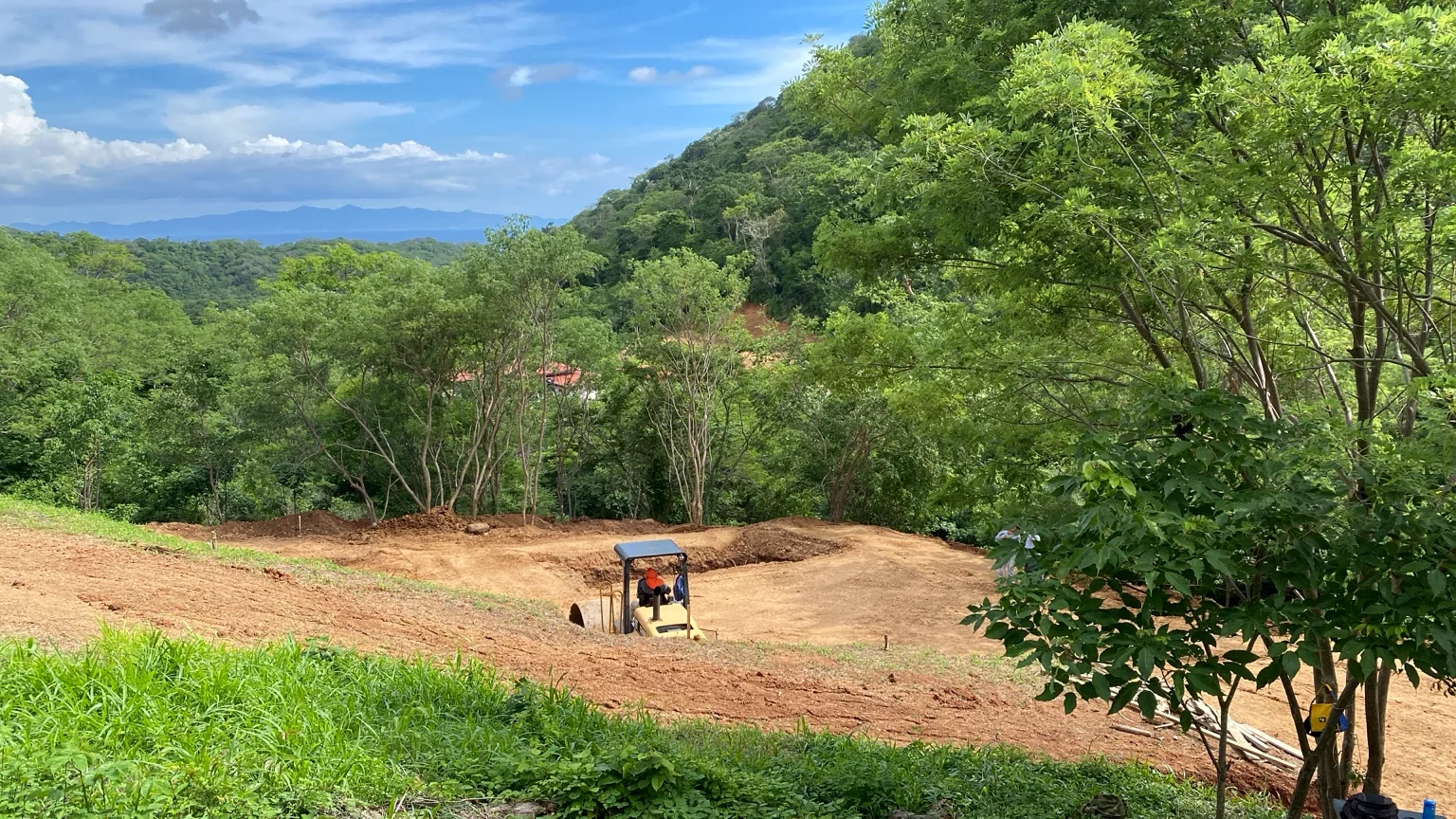
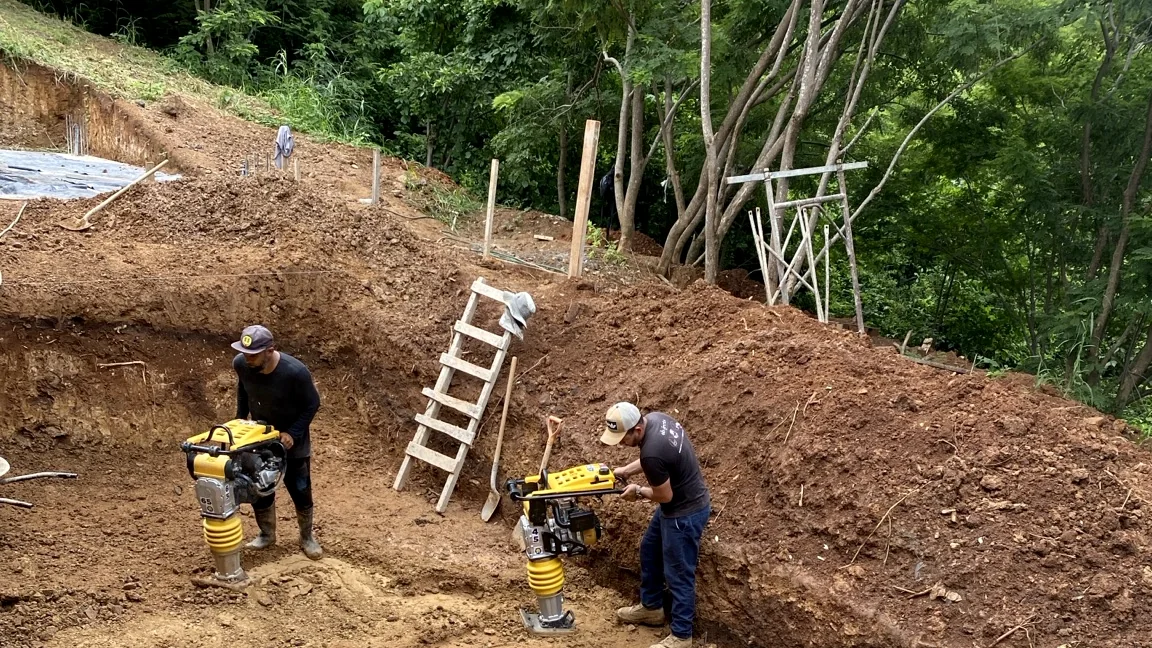
A beautiful hillside view can hide a very expensive building platform.
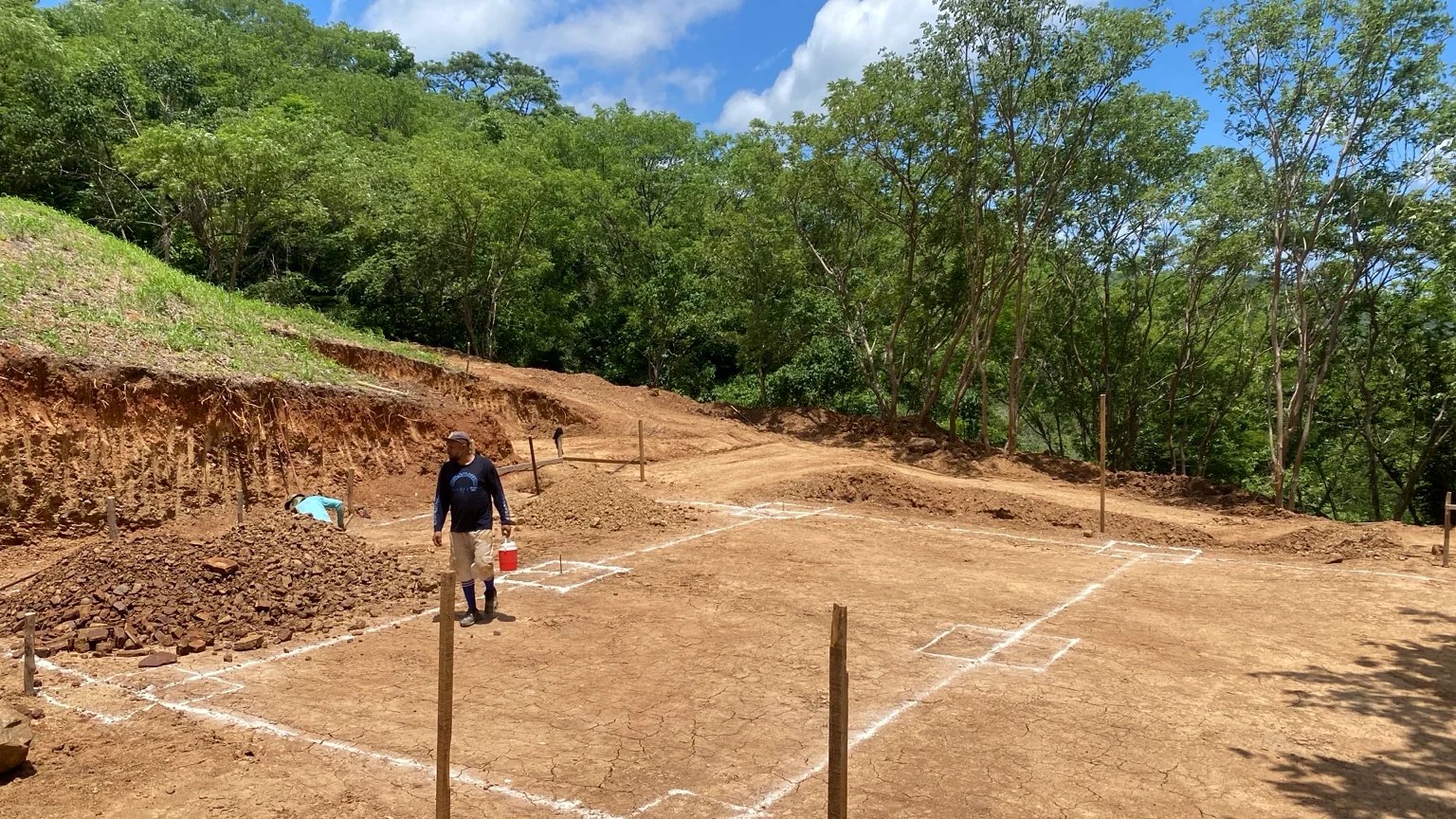
Before buying, assess the slope, soil, natural drainage, rock, vegetation and usable building area. A large property on paper may contain only a small section that can be developed efficiently.
Cut and fill, engineered retaining walls, deep foundations and difficult material access can add heavily to a construction budget. These costs are often discovered only after the land has already been purchased.
The correct question is not simply, “How many square metres is the lot?” It is, “How much of the lot can be used, and what will it cost to build there safely?”
4. Confirm the water supply
Never assume that water will be available because nearby homes have it.
Confirm where the water will come from, who controls the system, what connection costs apply and whether the supply is adequate throughout the year. If the property requires a private well, investigate the likely drilling depth, pumping requirements, storage, treatment and ongoing maintenance.
Water quality is equally important. A reliable source still needs to be tested to determine whether filtration, disinfection or other treatment will be required.
5. Establish the true cost of electricity
Electricity may be visible nearby but still be costly to bring to the property.
The location of the existing network, required poles, transformers, easements, tree clearance and approval process can substantially affect both cost and timing. Confirm whether the proposed connection is low voltage or requires an extension of the medium-voltage network.
For more remote properties, solar power and battery storage may form part of the solution, but they must be designed around the actual requirements of the completed home, including air-conditioning, pumps and other major equipment.
6. Study drainage before designing the house
Water is one of the most underestimated risks in tropical construction.
During the dry season, a site can appear straightforward. During heavy rain, natural water routes become obvious very quickly. Poor drainage can damage roads, undermine foundations, flood lower areas and create continual maintenance problems.
The house, pool, retaining walls, access road and neighbouring land all affect how water moves across a property. Drainage must be considered at the beginning of the design process, not added after construction problems appear.
7. Check planning, environmental and community restrictions
Before purchasing, establish what can actually be approved and built on the land.
Setbacks, building height, density, environmental conditions and municipal requirements may affect the design. Tree removal, work near waterways or infrastructure extensions may also require additional studies or permissions.
If the property is located within a development or homeowners’ association, review its architectural guidelines, fees and construction rules. Do not rely only on a verbal description of what other owners have been allowed to build.
8. Prepare a realistic total development budget
The purchase price is only the first number.
A serious feasibility budget should consider:
● Legal and closing costs
● Surveying and design
● Access and site preparation
● Retaining walls and drainage
● Water and electrical infrastructure
● Permits and professional fees
● House, pool and exterior works
● Landscaping and boundary work
● A realistic contingency
Only when these items are considered together can two properties be compared properly.
A $50,000 lot requiring $70,000 of infrastructure may be a worse purchase than a $75,000 lot that is already serviced, accessible and ready for construction.
Buildability matters more than the asking price
The best land purchase is not necessarily the cheapest property or the one with the most dramatic view. It is the property that supports the home you want to build, within a realistic total budget and without unresolved legal or infrastructure risks.
The right time to identify those risks is before paying a deposit.
At DIA Develop, we provide practical pre-purchase assessments based on real construction and development experience in the San Juan del Sur area. We can review a property’s access, site conditions, infrastructure requirements and likely development costs before a buyer commits.
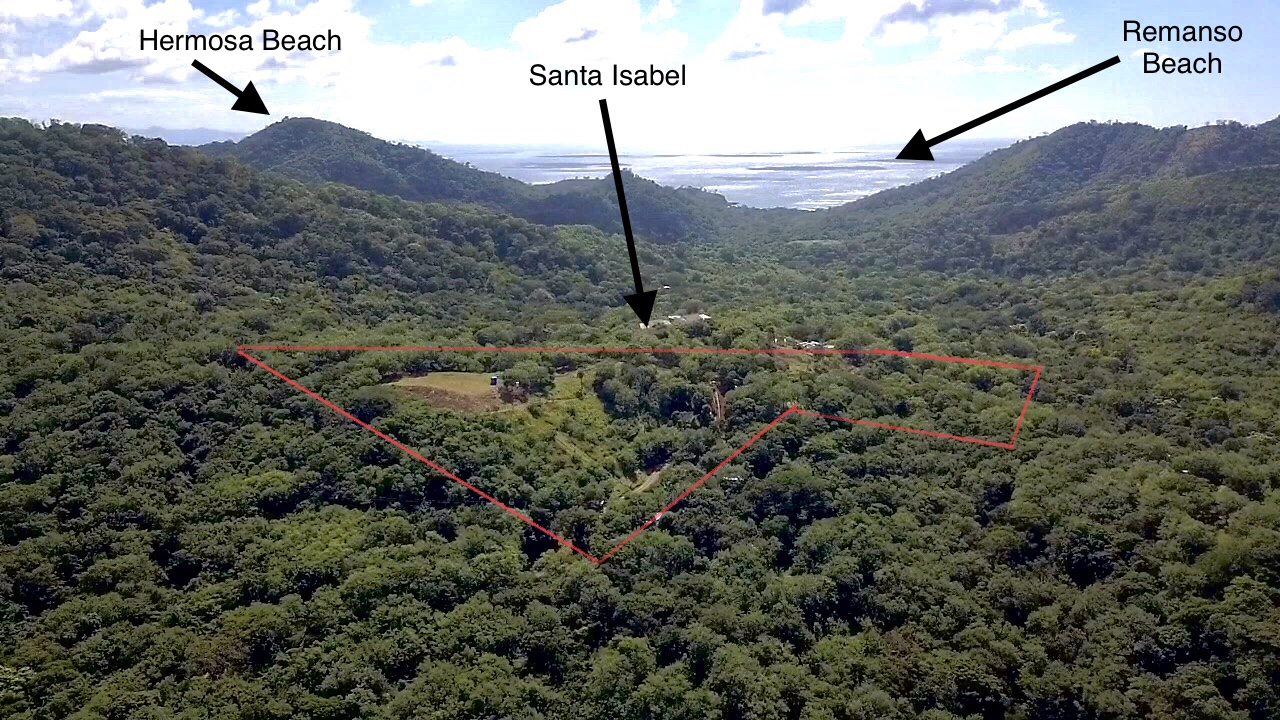
We also currently have a limited number of build-ready lots available within Santa Isabel, a completed residential community close to San Juan del Sur. Buyers can choose their own builder or work with our team to develop a home suited to the property.
If you are considering purchasing land or building in the San Juan del Sur area, contact DIA Develop before making a commitment. A proper assessment at the beginning can prevent a very expensive surprise later.
Whatsapp +505 8441 5768

Michael Cooney
Real estate developer and construction manager in San Juan Del Sur
Blog
Latest posts

.jpg)